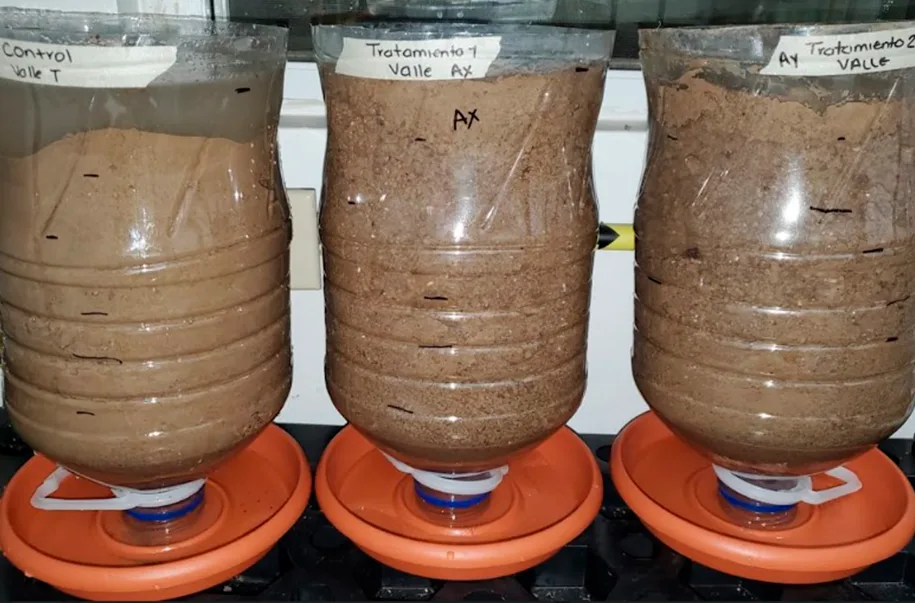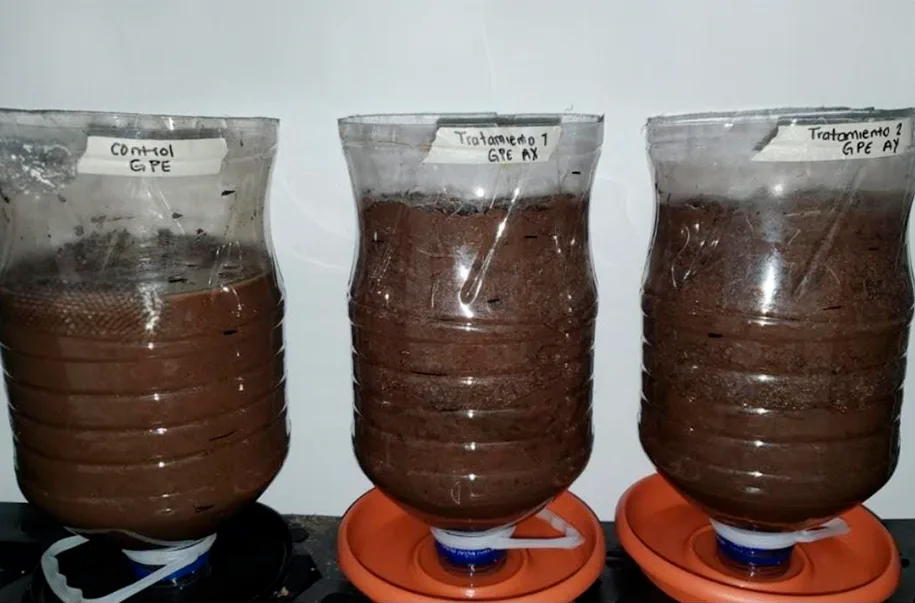
Much more than a soil conditioner, this extract of marine algae and land plants helps with moisture retention and the generation of secondary roots. Learn about the evaluation performed on Kelproot versus an absolute control (water) and a competing product from the same category (soil conditioner) to measure its effect on nutrient leaching and moisture retention in two soil types: clay loam (Valle de la Trinidad) and sandy loam (Valle de Guadalupe).
What did we look for in this study?
The objective was to evaluate the efficiency of Kelproot as a soil conditioner, knowing that among its main benefits are moisture retention and the prevention of soil leaching.
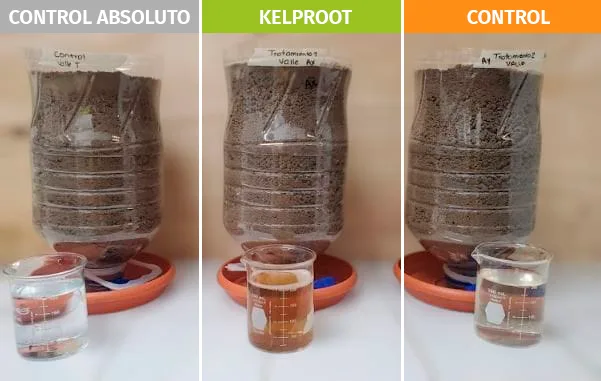
What did we find?
In this study we confirmed the stabilizing effects and differential ionic behavior of Kelproot. Kelproot reduced nutrient leaching by 33% compared to the competing product.
This means that a greater amount of ions such as calcium (Ca²⁺) and bicarbonate (HCO₃⁻), essential for soil structure and nutrient availability, remained in the root zone where the plant can absorb them.
Differential ionic behavior: Kelproot showed a stabilizing effect:
In sandy soil, which usually loses nutrients easily, leaching was only 33% of the total applied.
In clay soil, where there is greater cation exchange capacity, the loss was even lower: only 13%.
Better moisture retention: The effective blend of algae and land plants helped retain more usable moisture in the soil, reducing the risk of water stress and promoting an optimal environment for root development.
The main result: Less nutrient loss equals greater efficiency in the use of other agricultural inputs. More retained water equals more resilient crops and better use of irrigation.