Pecan is a strategically important crop economically for various regions of the world, being highly valued in the Asian and European markets. For this reason, good agronomic management must be carried out to achieve the desired quality of harvested fruit, meeting indicators of size, weight, oil content, coloration, etc. Proper nutrition, together with timely biostimulation, are factors that will benefit the development and productivity of this crop.
Vegetative development
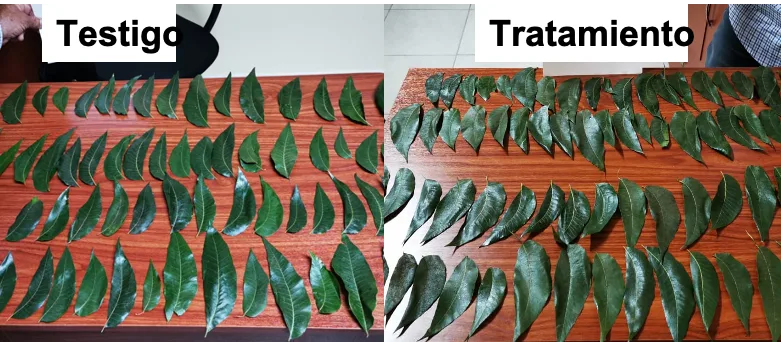
Biostimulation of shoots and foliage carried out with NPKelp® from the earliest stages of vegetative development improves the uniformity of leaf size and vigor, resulting in a crop with up to 14% greater foliar density and, therefore, an increase in its photosynthetic capacity.
In addition, it has been proven that supplying assimilable zinc through ZnKelp maintains optimal concentrations of this element (50 - 70 ppm), even when applied only via irrigation. This promotes balanced nutrient absorption which, together with the chelating capacity of NPKelp®, produces foliage with better coloration and resistance to abiotic stress.
Fruit growth, filling, and ripening
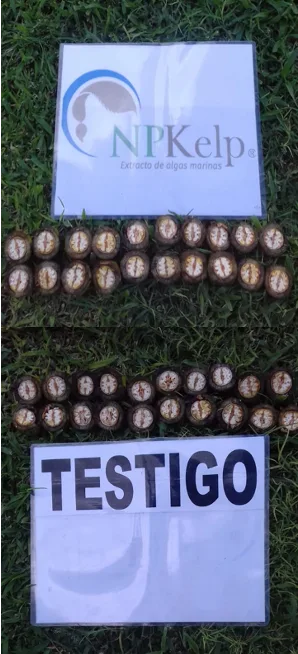
One of the critical stages in pecan cultivation occurs during fruit development and ripening, since filling problems are difficult to detect in time, causing severe economic losses for the grower.
For this reason, crop nutrition must be ensured beforehand. As mentioned earlier, both NPKelp® and ZnKelp are essential products for nutrient supply and have the ability to reduce husk filling problems (e.g., empty fruit) by 21 - 32%.
For organic crops, the use of Larusoil® is highly recommended as a source of available macronutrients and calcium, also supporting the propagation of beneficial soil microorganisms.
The effects of effective nutrition are evident during nut growth, as fruit with better size and 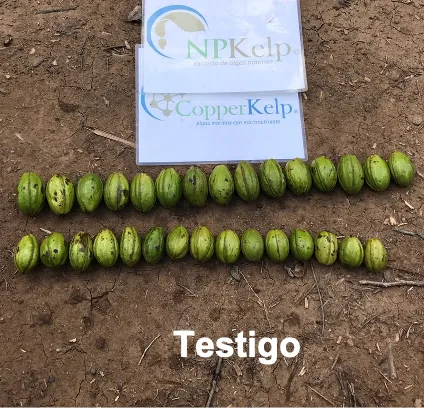 coloration becomes apparent. The use of Kelproot® and CopperKelp® during this stage stimulates the root system as well as the crop's defense system, reducing some of the damage caused by phytopathogenic organisms.
Control of phytopathogens
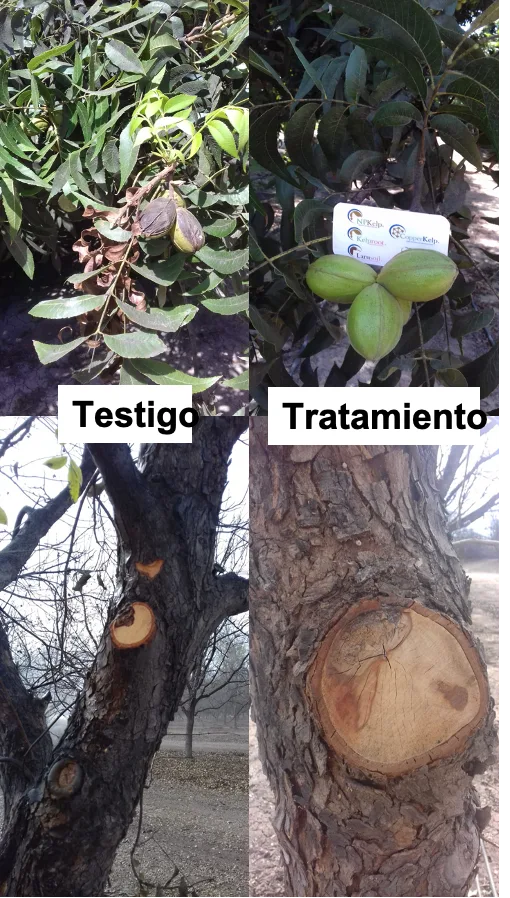 Among the microorganisms that cause diseases in pecan, we find:
• Agrobacterium
• Alternaria
• Botryosphaeria
• Cladosporium
• Diplodia
• Pseudomonas
• Phytophthora
• Xanthomonas
For this reason, it is recommended to apply CopperKelp® as part of an integrated management plan for these phytopathogens, as it can be used together with fungicides and bactericides without risk of incompatibility or resistance. It is worth noting that, due to the high permeability and translocation of the nanoparticles contained in CopperKelp® within plant tissue, the establishment and spread of certain phytopathogens can be inhibited. This is the case with fungi of the genus Diplodia, which cause diseases such as wood rot or canker, where their effects have been reduced.
Fruit yield and quality
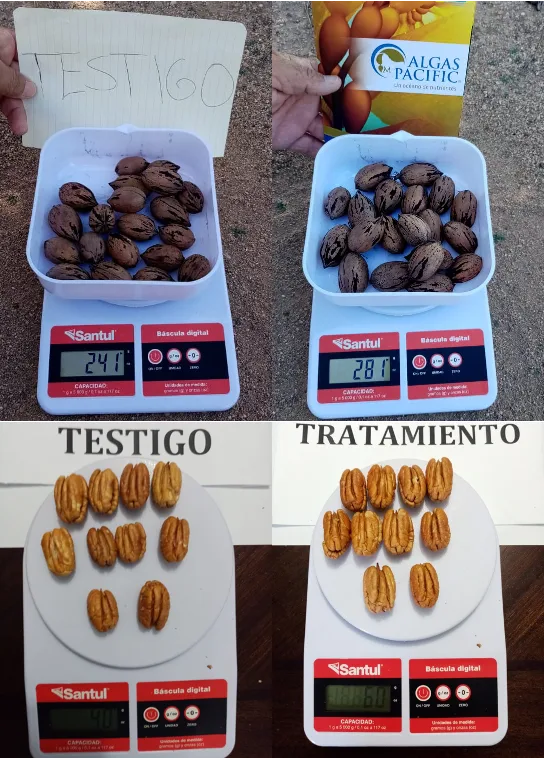 Finally, the use of plant biostimulation with NPKelp® and the supply of zinc through the organic chelate contained in ZnKelp have been shown to increase pecan productivity, achieving yields 7 - 17% higher in treated crops.
In addition, the shell-to-kernel ratio has improved by 4 - 5%, along with other qualitative factors such as coloration and nut size, resulting in more uniform harvests with greater commercial value in the market.
In summary, whether combined or used individually, Algas Pacific® products can make a significant contribution to the proper development and yield of pecan cultivation. Whether through plant stimulation (NPKelp® and Kelproot®), activation of the defense system (CopperKelp®) and/or nutritional supply of essential elements (Larusoil® and ZnKelp), the benefits of their correct application have been clearly demonstrated.