Strawberry cultivation has become one of the most representative crops in Mexico, positioning the country in 2020 as the world's leading exporter thanks to its high production quality and its relationship with the United States, which covers nearly 90% of its domestic demand with Mexican fruit.
In addition to this, Mexico does not neglect its domestic consumption, since current production is enough to cover it entirely. Among the country's leading strawberry-producing states are: Michoacán, Baja California, Guanajuato, and the State of Mexico, which together account for 97% of national production.
It is worth noting that these achievements have been made possible thanks to the efforts of everyone along the entire value chain, from small independent growers to large marketing companies.
The biggest challenges for this fruit lie in the field, where growers must contend with various issues such as climate change, labor availability, pest and disease management, and market prices, to name a few. This is where technology (mechanization, technified irrigation, application of effective products) and, of course, specialized technical guidance, become key factors for the successful production of this crop.
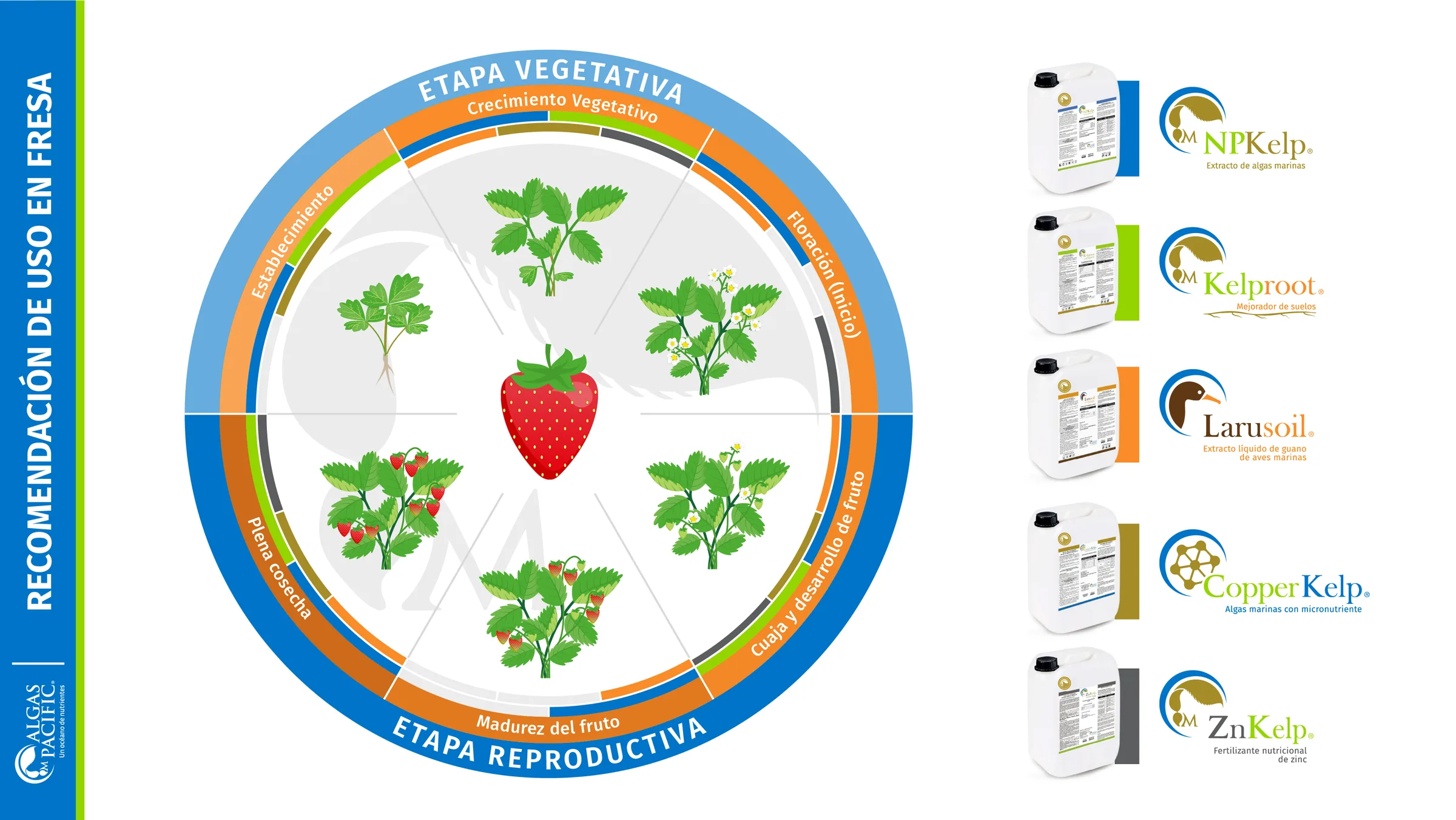
Algas Pacific® continues working hard to optimize effective biostimulation and nutrition for strawberries, both organic and conventional, achieving outstanding results in Mexican and American fields; results in Mexico and the United States. Below is the recommended use of the solution lineup for sustainable agriculture:
NPKelp®
Abiotic stress caused by the environment and intensive management can significantly reduce strawberry yields, especially during periods of intense heat, prolonged rainfall, and extensive harvests. NPKelp® is a versatile tool that can prevent or correct this type of stress, since its formulation allows it to act preventively or correctively through foliar or irrigation applications.
Situation: Mitigation of stress caused by constant rainfall, low temperatures, and lack of sunlight (photosynthesis).
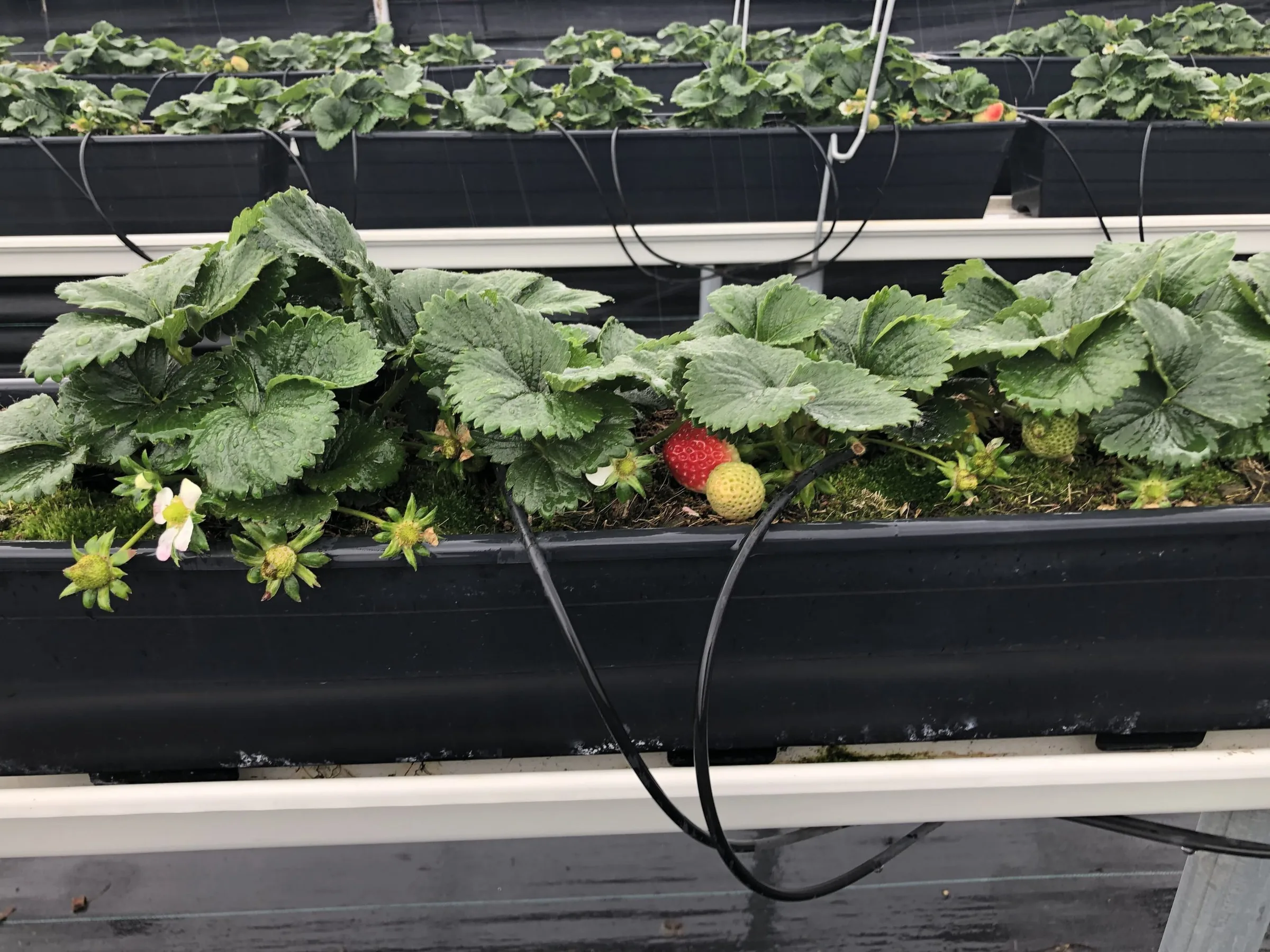
Watsonville, CA. - Strawberry in substrate
Kelproot®
Root development is essential from the earliest stages of the strawberry plant to ensure proper vegetative growth and optimal nutrient supply during fruit set and harvest. Kelproot®, in addition to being a rooting agent, also works as a soil conditioner, ideal for establishing strawberries in clay soils and substrates with low moisture retention, promoting the development of primary and secondary roots even under adverse conditions.
Situation:
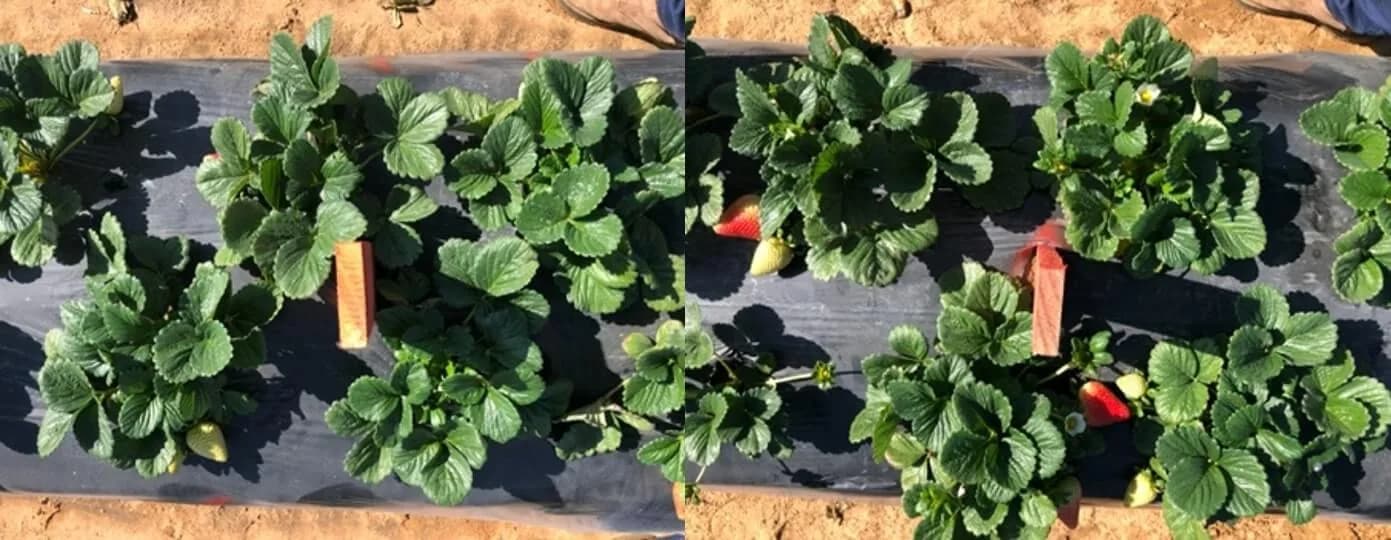
Root development in compacted, high-salt-content soils:
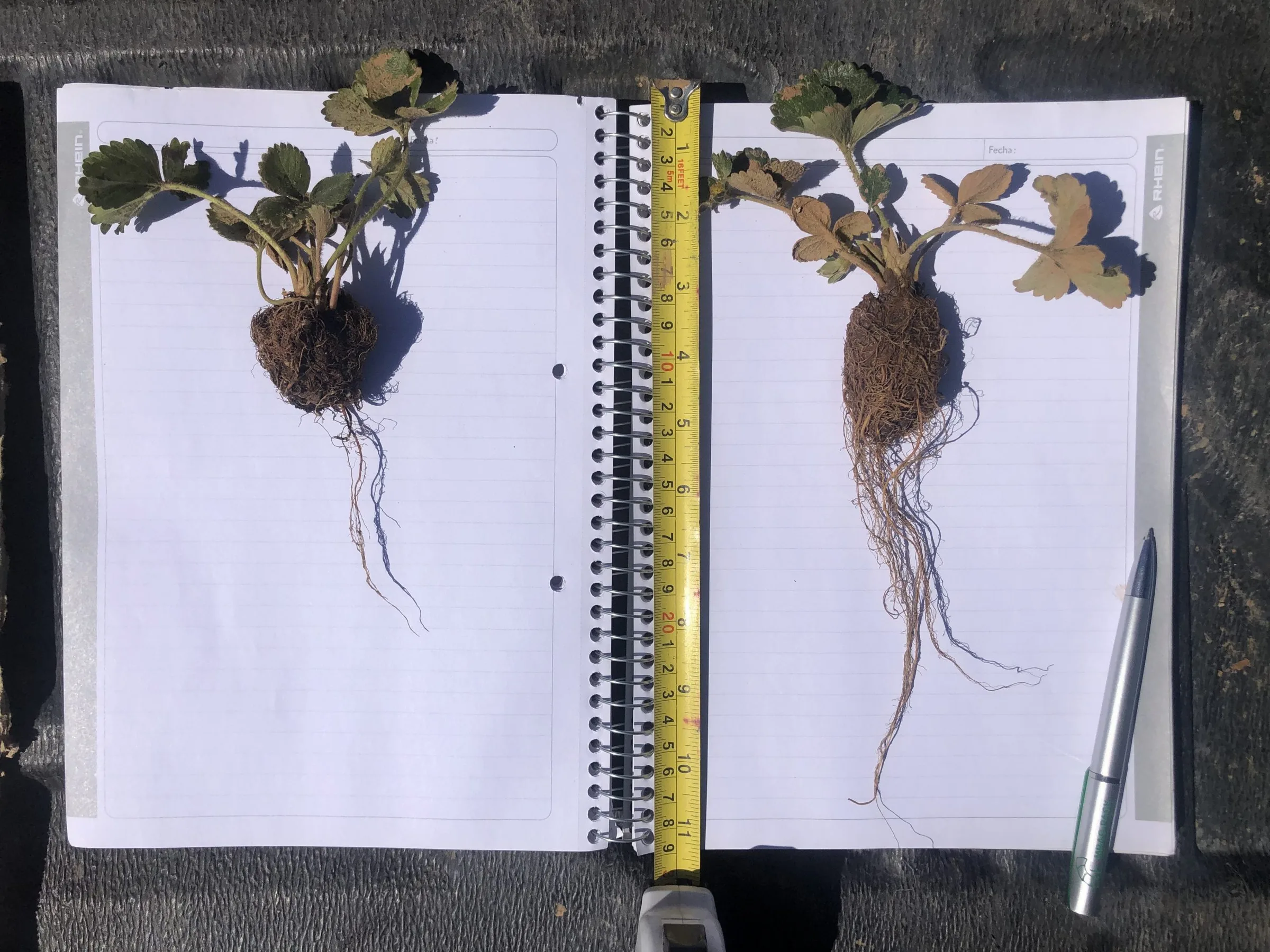
Valle de San Quintín, B.C. - Strawberry in clay soil
(left, control; right, treatment)
Larusoil®
Thanks to its production process and the safety of its seabird guano extract, Larusoil® has broken with the classic approach, showing that quality is better than quantity.
Due to the limited availability of assimilable nitrogen and phosphorus sources, especially in organic strawberry production, the use of Larusoil® has won over growers as an effective macronutrient throughout the entire production cycle, despite its “low concentration” compared to synthetic sources.
Situation:
Application of Larusoil as a complementary source of nitrogen and phosphorus prior to the period of peak production:
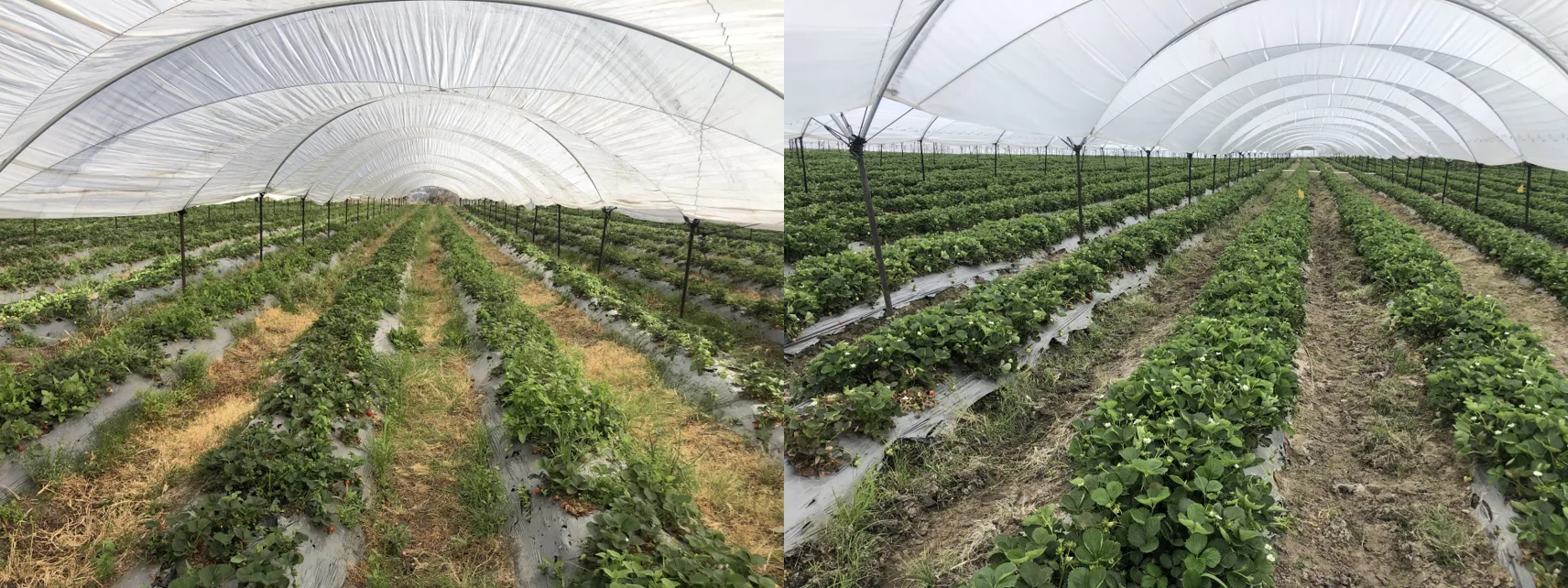
Tapalpa, Jalisco - Organic strawberry
(left, control; right, treatment)
CopperKelp®
Supplying bioavailable copper for strawberry cultivation is unfortunately an underused practice, missing out on its properties as a micronutrient in metabolic processes such as photosynthesis and defense system activation. Copperkelp®, made with pure Cu2+ nanoparticles, allows for the absorption and storage of active copper without generating any type of toxicity, helping to prevent and control diseases caused by fungi and bacteria.
Situation:
Prevention of wilt caused by Fusarium following high relative humidity:
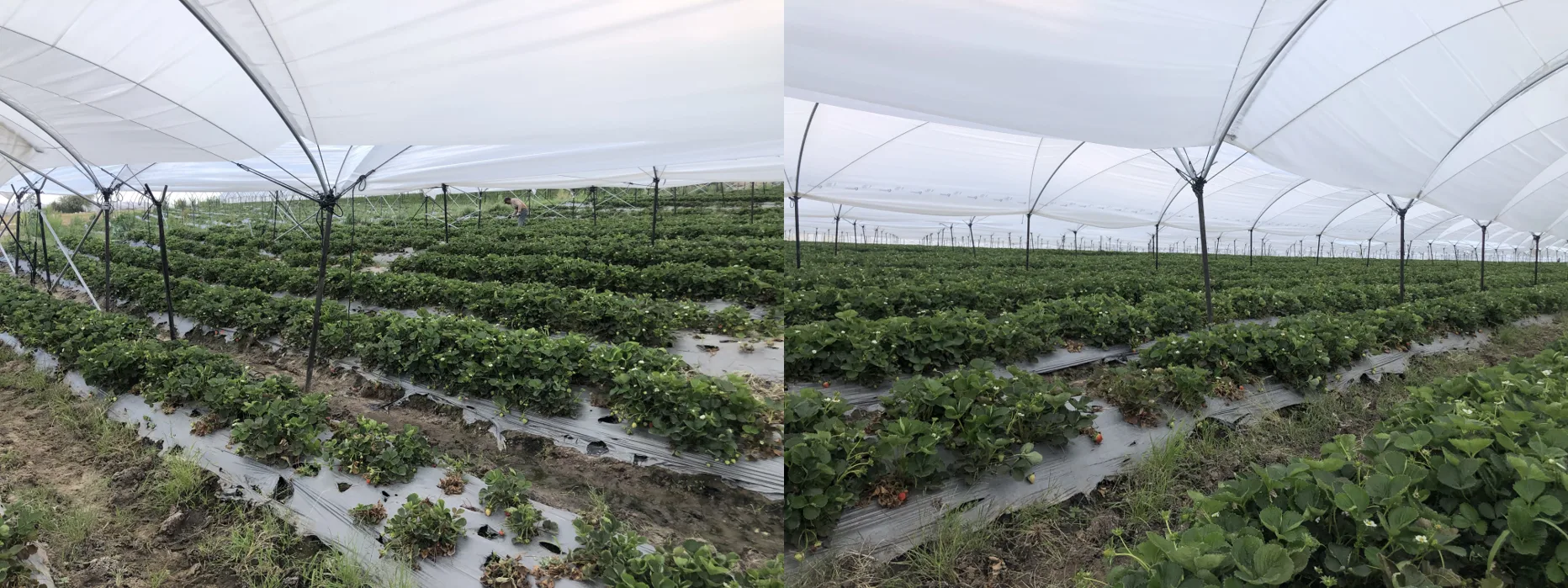
Zamora, Michoacán - Fungal control
Left, control; right, treatment
ZnKelp®
Another micronutrient that tends to be undervalued in strawberry production is zinc, which is a vitally important element during establishment, flowering, and fruit development.
Depending on the variety, conditions, and productivity of the crop, its application can be done every two weeks or weekly, with the selection of the material being decisive to avoid problems of toxicity or leaching. ZnKelp® and its organic chelation technology achieve proper absorption, translocation, and assimilation of zinc in this crop.
Situation:
Crop in full production showing notable differences in vegetative development and number of flowers and fruits due to the correct zinc supply.
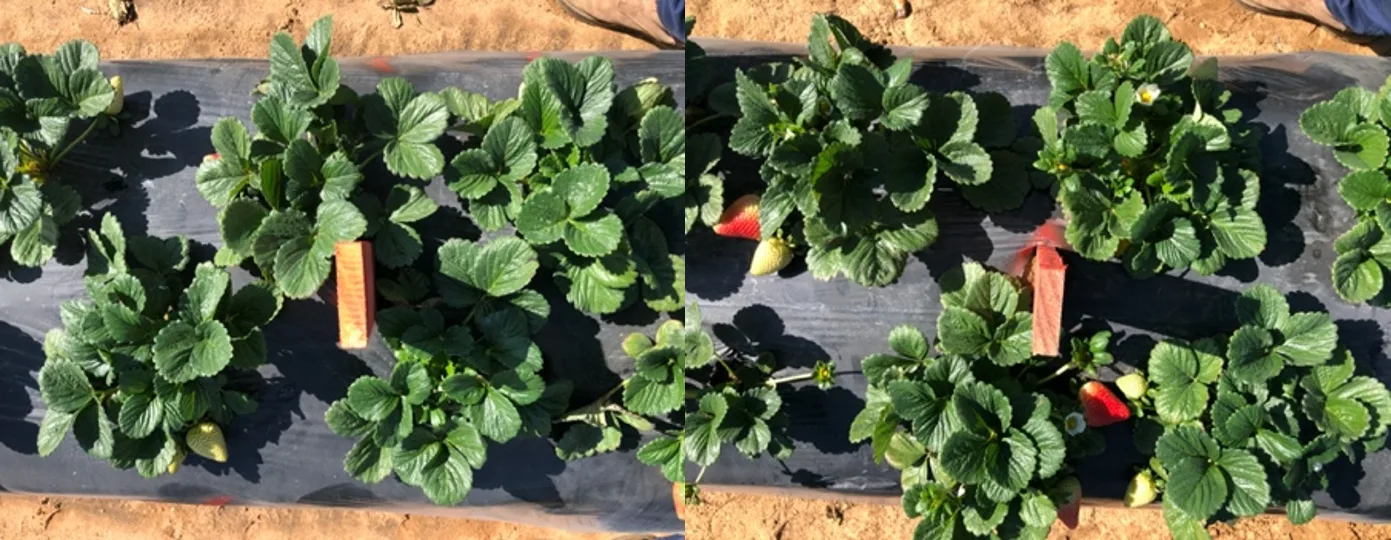
Vicente Guerrero, BC - Strawberry in production
(left, control; right, treatment)
Try this line of organic solutions and discover why Algas Pacific® is an ocean of nutrients.